
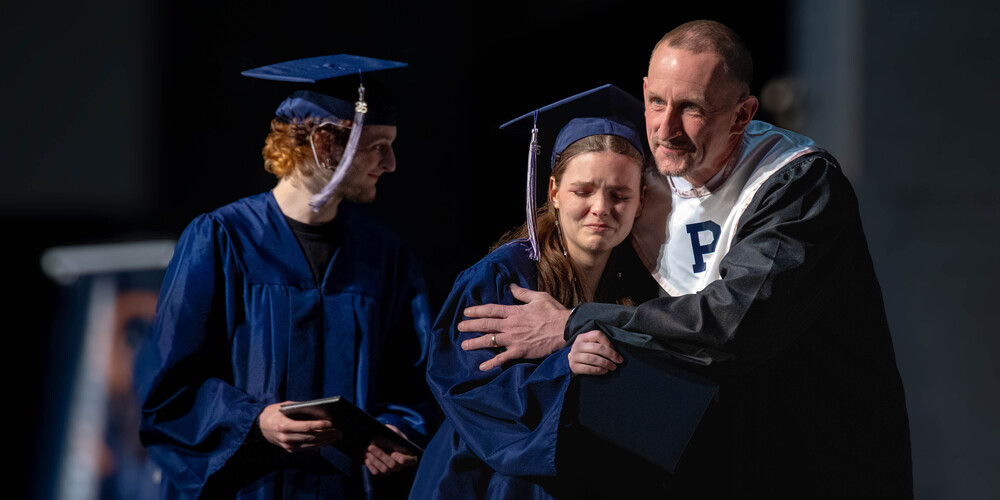
As school district boundaries shift and communities adapt to change, Aspen Peaks and Timpanogos school districts are ensuring one thing remains constant: support for students who need alternative pathways to success. A newly approved Memorandum of Understanding will keep Polaris High School and Summit High School operating through 2030, providing continuity for some of the region's most vulnerable and at-risk students.
The agreement comes as the two districts navigate the implementation of a district split and demonstrates a shared dedication to maintaining stability and access for students who rely on alternative education settings. By continuing to work together, district leaders say they can preserve critical services while responsibly managing resources and minimizing disruption for students, families, and staff.
“This is an awesome opportunity to continue to support students who need alternative school options,” said Joel Perkins, superintendent of Aspen Peaks School District. “Partnering with Timpanogos allows us to help each other shoulder the costs of such programs through the transition.”
Alternative schools such as Summit and Polaris serve students whose educational needs may not be fully met in traditional school environments. Through smaller class sizes, individualized support, and specialized programming, these schools help students overcome academic, social, and personal challenges while working toward graduation and future success.
A Future Worth Investing In
For Summit High School Principal Dan Biolo, the agreement represents a major victory for students, families, and staff members who have built a strong community over the school's 46-year history.
Biolo has witnessed firsthand the transformative impact of alternative education. One former student's journey, he said, illustrates the life-changing difference that stability, support, and caring relationships can make for young people facing significant challenges.
“This student came to Summit not by choice but by force. She was in state custody and extremely behind on credit so the choice was made for her to attend Summit. Since her childhood her life was filled with heavy drinking, drugs, abuse and other hardships. She wondered each night where she would sleep. A camper in a driveway and the floor of a garage with relatives were all homes for her as a child. Due to the lack of parental support, her life was filled with no rules and do what you need to survive today. Through all of this, school was way down on her priority list. But she came to Summit, found a home, found stability in the DCFS system and became a leader among her peers. She graduated, went on to college and has become a nurse and currently has a family of her own, raising her children better than what she was faced with. One line of the Summit student creed is I know that I can overcome adversity and challenges. This student and so many others do that on a daily basis and Summit is so proud to play a small role in their lives.”
Stories like this are why district leaders say preserving alternative education programs remains essential. The newly approved agreement ensures those resources will remain available to students across both districts for years to come.
Prioritizing Stability
Perkins exclaimed that securing the agreement was a priority during the district transition because of the uncertainty many students and educators have faced regarding the future of the programs.
“Transitions are challenging for everyone,” he said. “The uncertainty around the future of this school has been a weight for this group of students and those who serve them. This agreement provides stability for students who need it and also allows us to reduce the uncertainty for the amazing teachers and staff who support these students.”
The MOU provides a clear path forward through 2030, giving both districts time to develop long-term plans while preserving the services students currently depend on.
“We care about you and about every single one of our students,” Perkins said. “In Aspen Peaks, we truly believe in supporting all students. This is an opportunity for us to demonstrate this focus in a very clear and tangible way.”
Best-Case Scenario
“This MOU is the best-case scenario for Summit,” Biolo said. “It provides the stability and clarity of being in a familiar building with familiar staff and continuing to be who we have been. This MOU gives us clarity until 2030 when we will have a greater vision and course set for the future in the new districts.”
Summit serves a unique student population, including many youth in the care of state agencies such as the Utah Division of Child and Family Services and the Division of Juvenile Justice and Youth Services. Students from multiple group homes and state-supported programs across both district boundaries attend the school.
According to Biolo, maintaining a centralized school for these students over the next three years will be invaluable.
“Because our funding is primarily from the state, and because the majority of our students reside in the two districts, we will have financial stability to provide the same level of education and care as we have in the past for all Summit students.”
As Aspen Peaks and Timpanogos move forward, district leaders say the agreement reflects both careful stewardship of resources and a shared belief that every student deserves a pathway to success. By preserving Polaris and Summit through 2030, the districts are providing stability amid change and reaffirming their commitment to ensuring all students can connect, engage, and reach their full potential.